Cinema and education #4 — When the class makes the film: what we learned from our workshops
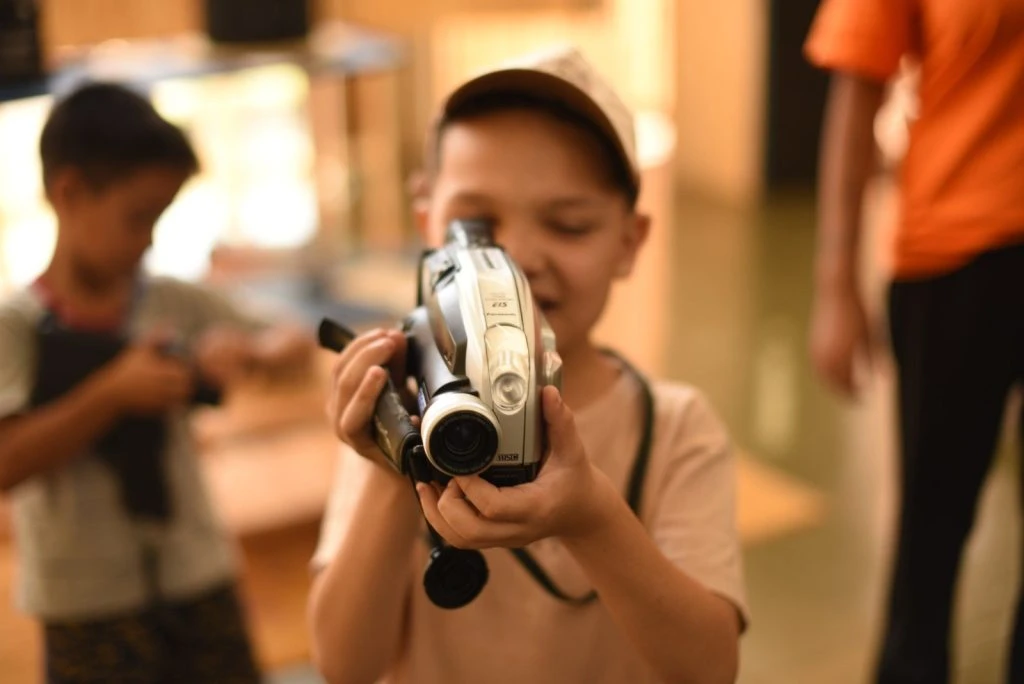
Fourth post in Pupilo’s Cinema and Education series. Our post “Quando a criança segura a câmera” (in Portuguese) tells the story of the Terror na Creche (Horror at the Daycare) workshop and introduces Rede Kino and other projects that make films with students. Here, we go behind the scenes: what we learned from running workshops.
In recent years, Pupilo has taken film workshops to a daycare center, to youth centers, to quilombola communities and to groups of immigrants. Each one was different. But some lessons keep coming back, and they echo what researchers in cinema and education have been writing for years.
Four workshops, four stories
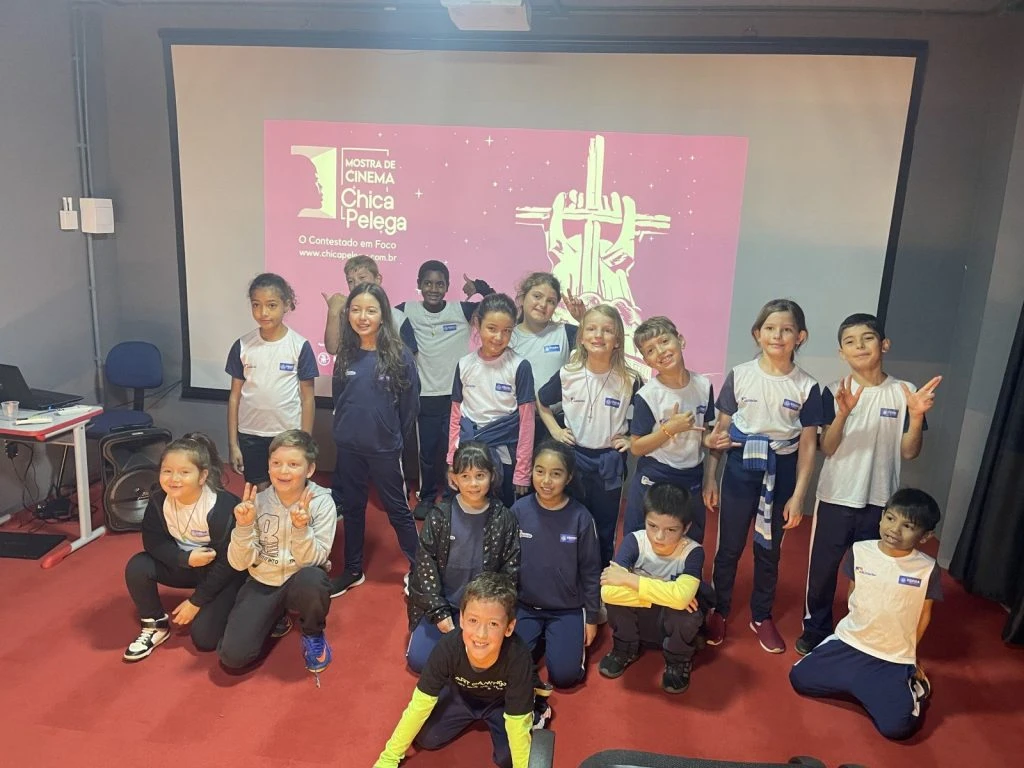
Quilombola communities in the Contestado region (2023). In May 2023, as part of the 3rd Chica Pelega Film Festival, quilombola edition, filmmaker Yasser S. González led the workshop “O Minuto que Foi” (The Minute That Was) in the communities of Invernada dos Negros and Campo dos Poli, in Santa Catarina. It produced three collective short films: A luta de um quilombola polinário, Luta e resistência – Invernada dos Negros and Nos batuques dos tambores: o sonho de muitos. The story is told by the people who live it.
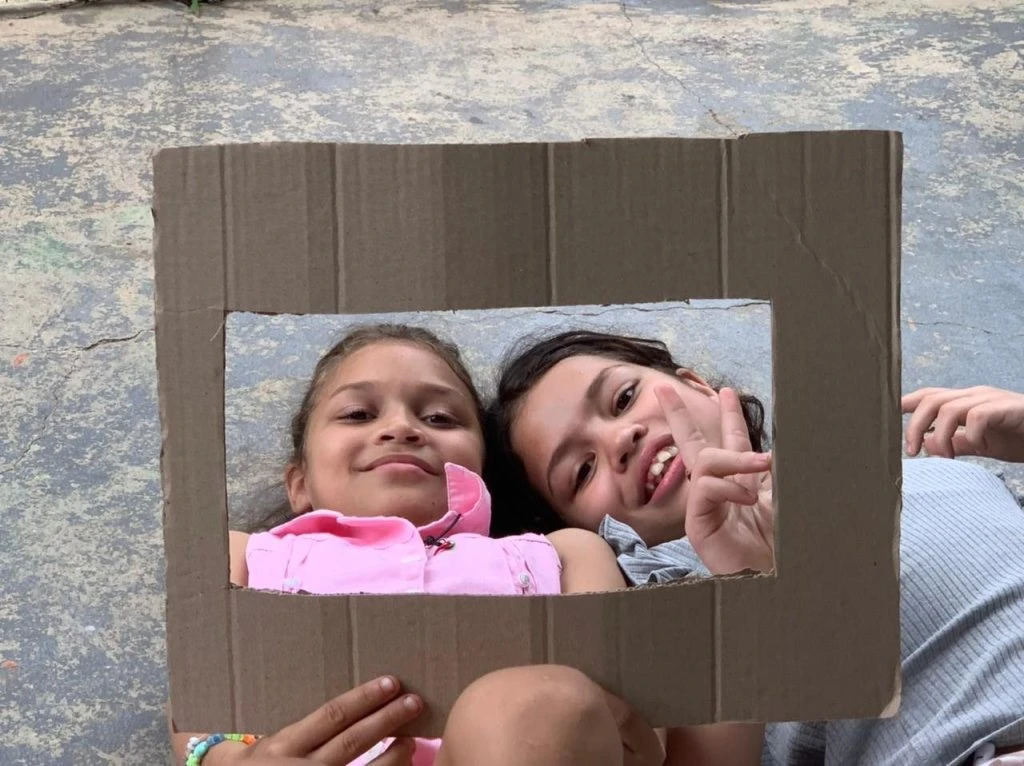
Projeto Realidades, Pinhais (Paraná, 2023). Over eight sessions with teenagers from social assistance programs and the Pinhais Youth Center, the workshop combined filming exercises and film club screenings about cyberbullying. The result was the short film A Opinião é Sua, a Realidade é Minha (Your Opinion, My Reality).
Oficine, Campo Mourão (Paraná, 2024). Twenty-five teenagers served by the local social assistance center (CRAS), in partnership with the city’s Social Assistance Department, spent an intense week making films, with 25 hours of training, discussing topics like class consciousness. They made the shorts Elisa and A Cadeia (The Jail), which premiered on August 14, 2024, and were screened at the Campo Mourão Youth Colloquium. One of them was selected for the Cinema and Education showcase at CineOP, in Ouro Preto.
O Minuto que Foi, Joaçaba (Santa Catarina, 2025). In February 2025, the workshop came back, this time with Haitian and Venezuelan immigrants, in partnership with Joaçaba’s Social Assistance Department. Speaking Portuguese fluently was not a requirement. The collective documentary Entre Mundos, Entre Cidades (Between Worlds, Between Cities) talks about racism, longing and integration.
Lesson 1: the process matters more than the product
It is tempting to judge a workshop by the quality of the final film. Alain Bergala, in his book L’hypothèse cinéma, warns against this. At school, he writes, the main goal is not the “film-object”, but the irreplaceable experience of an act of creation, however modest (BERGALA, 2008, p. 173).
He even distrusts school films that get a lot of applause: sometimes those are exactly the ones their makers learned least from, because they worried too much about pleasing the audience (BERGALA, 2008, p. 173). Nobody expects a ten-year-old to draw like a professional painter. Why would we expect that from their film? (BERGALA, 2008, p. 174-175).
So what should we assess? According to Bergala: engagement in the process, the coherence of the process, and the fact that someone really made choices and tested them while filming and editing (BERGALA, 2008, p. 175).
Lesson 2: the adult is there too, and that’s fine
Every workshop raises the question: how much should the adult intervene? Bergala is honest about it. He distrusts people who announce, without anyone asking, that “the students did it all by themselves” (BERGALA, 2008, p. 178, our translation). On a film set, the director talks to the producer, the crew, the actors; school is no different. What matters is to clearly distinguish what came from the children, what was negotiated with them and what came from the adult (BERGALA, 2008, p. 178).
A rule that helps: agree from the start that the idea, the framing and the final decision belong to the class, and that workshop leaders and teachers help with technical matters and organization. And say so openly when presenting the film.
Lesson 3: a film is only finished when it meets an audience
Bergala reminds us that if school wants to be a place of exchange, it must commit to “showing what was made” (BERGALA, 2008, p. 173, our translation). But carefully: presenting the films as records of an experience, not as an end-of-year show. One good idea, he suggests, is to show the process (exercises, rehearsals, different cuts) and the result in the same screening (BERGALA, 2008, p. 174).
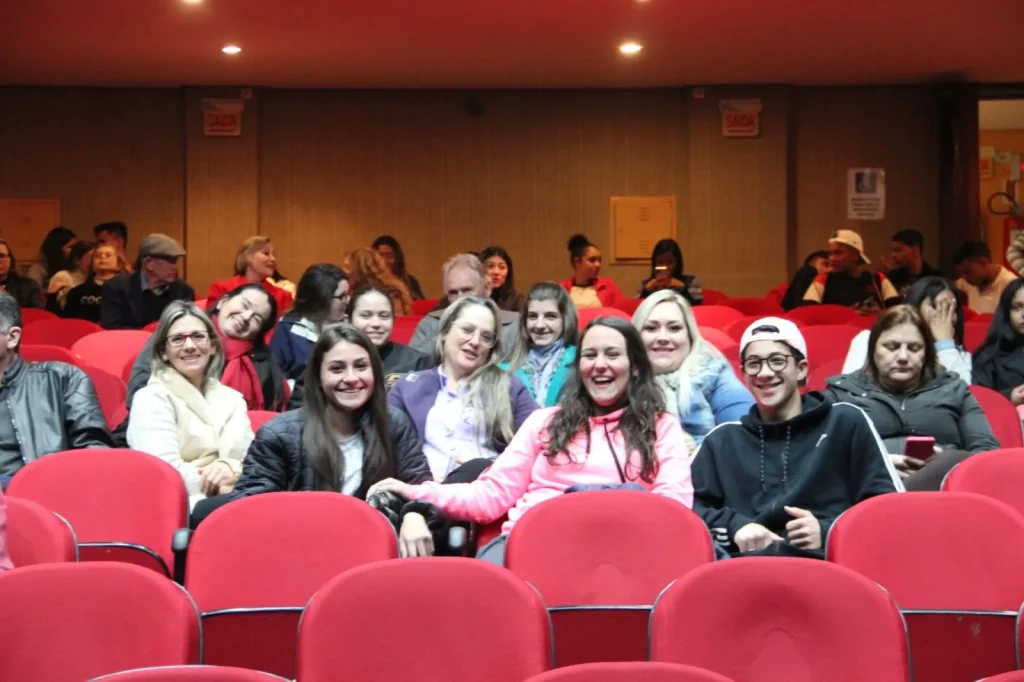
In the workshops described here and in “Quando a criança segura a câmera”, the films premiered in front of an audience: the daycare shorts at Joaçaba’s House of Culture, the Campo Mourão films at the Youth Colloquium, the Pinhais film at a premiere at the end of the workshop, the quilombola films in the program of the 3rd Chica Pelega Film Festival. That is the moment when the class sees the audience’s faces watching their film.
Lesson 4: the subject comes from the class
At the Joaçaba daycare, as we told in the other post, the children wanted horror, and they made seven films. In the quilombola communities and with the immigrants, the films speak of what these people live and want to tell. The Inventar com a Diferença project, from Fluminense Federal University, talks about everyone’s right to narrate their own territory and their own life (MIGLIORIN et al., 2014, p. 13). A good starting point is to ask: what do you want other people to see?
An idea to take to school: the film-letter
In Inventar com a Diferença, the final project of the workshops is the film-letter: students make, with images and sounds, a letter about themselves and their territory, a way of corresponding with other people through cinema (MIGLIORIN et al., 2014, p. 22). It is a great idea for schools in different towns, or in different neighborhoods of the same town.
Fresquet and Migliorin report that Rede Kino, the Latin American Network for Education, Cinema and Audiovisual, has mapped films made in schools in every Brazilian state, by students of all ages, including in special education schools, adult education (EJA) and juvenile detention centers (FRESQUET; MIGLIORIN, 2015, p. 16). In other words: lots of people are doing it. Your class could be next.
The films mentioned here are in the Made by children and young people theme on Pupilo Play. Showing a class a film made by other students is often the push that was missing.
In this series
- #1 Why cinema at school
- #2 Law 13.006, more than ten years on
- #3 Cinema as art at school
- #4 When the class makes the film (this post)
- #5 How to bring a film into class with Pupilo Play
References
- BERGALA, Alain. A hipótese-cinema: pequeno tratado de transmissão do cinema dentro e fora da escola. Translated by Mônica Costa Netto and Silvia Pimenta. Rio de Janeiro: Booklink; CINEAD-LISE-FE/UFRJ, 2008. (Original: L’hypothèse cinéma, 2002.)
- FRESQUET, Adriana; MIGLIORIN, Cezar. Da obrigatoriedade do cinema na escola, notas para uma reflexão sobre a Lei 13.006/14. In: FRESQUET, Adriana (ed.). Cinema e educação: a Lei 13.006 – reflexões, perspectivas e propostas. Ouro Preto: Universo Produção, 2015.
- MIGLIORIN, Cezar; PIPANO, Isaac; GARCIA, Luiz; GUERREIRO, Alexandre; NANCHERY, Clarissa; BENEVIDES, Frederico. Inventar com a diferença: cinema e direitos humanos. Niterói: Editora da UFF, 2014.
- Making of oficina de cinema “O minuto que foi” – Comunidade Quilombola Invernada dos Negros. Pupilo YouTube channel, 2023.
- Making of – Projeto Realidades. Pupilo YouTube channel, 2023.
- Oficine Campo Mourão. Pupilo YouTube channel, 2025.
- Making of – O Minuto Que Foi. Pupilo YouTube channel, 2025.