Cinema and education #3 — Cinema as art at school
Third post in Pupilo’s Cinema and Education series. After talking about why and about Law 13.006, we come to an idea that changed the way many people think about cinema at school.
Almost everyone who went to school in Brazil has watched a film in class “to learn something”: the French Revolution, the water cycle, a novel from the university entrance exam reading list. The film as illustration. This post is about another path, one that doesn’t fight the first but goes further: treating cinema as art.
Bergala’s hypothesis
Frenchman Alain Bergala has been a critic and editor at Cahiers du Cinéma, a filmmaker and a teacher. Between 2000 and 2002 he advised the film program for French public schools (STECZ, 2015, p. 143). That experience led to his book L’hypothèse cinéma, published in Brazil in 2008 as A hipótese-cinema by Booklink and CINEAD, a program at the School of Education of the Federal University of Rio de Janeiro (UFRJ).
The hypothesis, as he tells it, is about the encounter with otherness: art enters school as something “radically other”, which does not fit entirely into the logic of subjects, syllabus and exams (BERGALA, 2008, p. 29, our translation). For him, art is by nature something that unsettles the institution, and that is a good thing (BERGALA, 2008, p. 30).
That leads to one of the book’s most quoted lines: art is not taught, but encountered, experienced and passed on by other paths than the discourse of knowledge (BERGALA, 2008, p. 31). The teacher, in this case, is no longer just the one who explains, but a “passer”: someone who takes the class to the film and stays with them in front of it.
You don’t need to be an expert
Many teachers give up on cinema because they think they need to master technical terms: medium shot, low angle, tracking shot. Bergala is reassuring. For him, a teacher who knows little but approaches cinema openly will always be worth more than one who clings to rigid definitions of camera movements and shot sizes (BERGALA, 2008, p. 127).
Vocabulary helps, but it comes later. What matters is the attitude: curiosity, attention, the will to look again.
Watching like someone who is about to film
The book’s most practical proposal, and perhaps the most useful for the classroom, is what Bergala calls “creative analysis”. Instead of just decoding the film (“what does it mean?”), the class tries to go back to the moment when choices were still open, when the filmmaker could have done it differently (BERGALA, 2008, p. 129-130).
He quotes filmmaker Jean Renoir, for whom loving a film means being “a potential filmmaker”: thinking “I would have done it this way or that way” (BERGALA, 2008, p. 128, our translation). And he gives a lovely example: when we see a bouquet of roses on screen, we should imagine there could have been tulips and lilies instead (BERGALA, 2008, p. 131). Everything in a film was chosen among other possibilities.
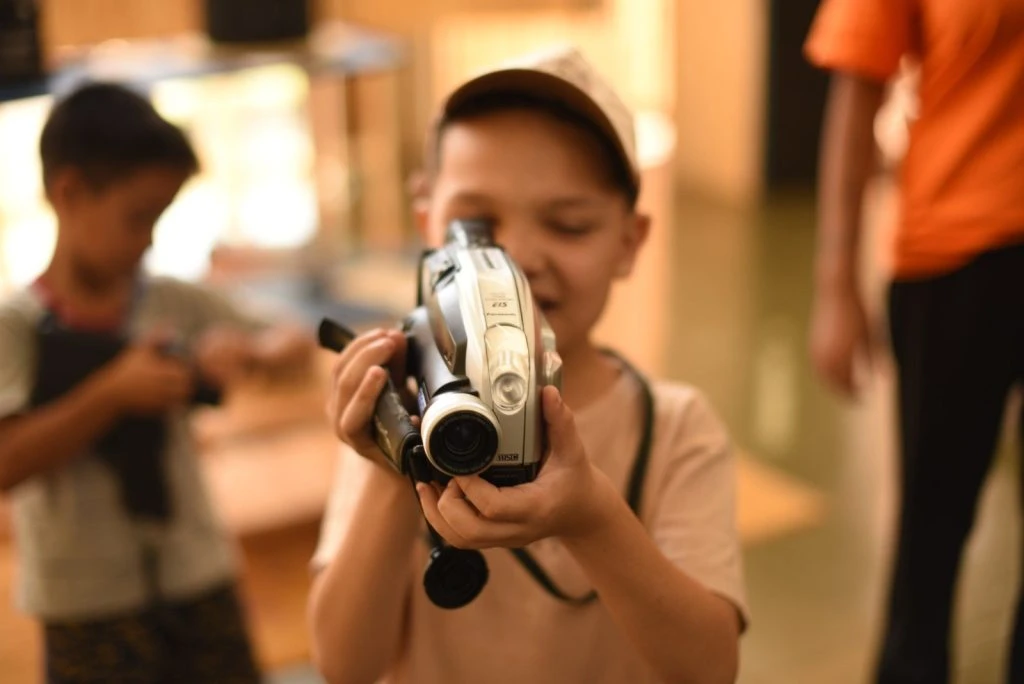
Bergala sums up the creative act in three simple mental operations, always intertwined: choosing, arranging and attacking (BERGALA, 2008, p. 134). Choosing what to film, deciding where to place things and the camera, and picking the moment to start. In the post “Quando a criança segura a câmera” (in Portuguese), we show how these three operations appear when children take the camera.
Watching and making, two sides of one coin
In Brazil, these ideas were taken up and transformed by researchers and projects. Adriana Fresquet (UFRJ) and Cezar Migliorin (UFF) write that watching and making are the front and back of the same practice (FRESQUET; MIGLIORIN, 2015, p. 16). Those who watch attentively start wanting to film; those who film start watching differently.
The project Inventar com a Diferença (Inventing with Difference), run by Fluminense Federal University with Brazil’s Human Rights Secretariat, took this idea to public schools across the country. Its teaching material says right at the start that it is not a rulebook, and that the aim is neither to train filmmakers nor to teach techniques (MIGLIORIN et al., 2014, p. 12). Instead, it proposes “devices”: exercises, games and challenges with simple rules, so that students can handle the basics of cinema and, at the same time, invent with it (MIGLIORIN et al., 2014, p. 22).
Three exercises for your next class
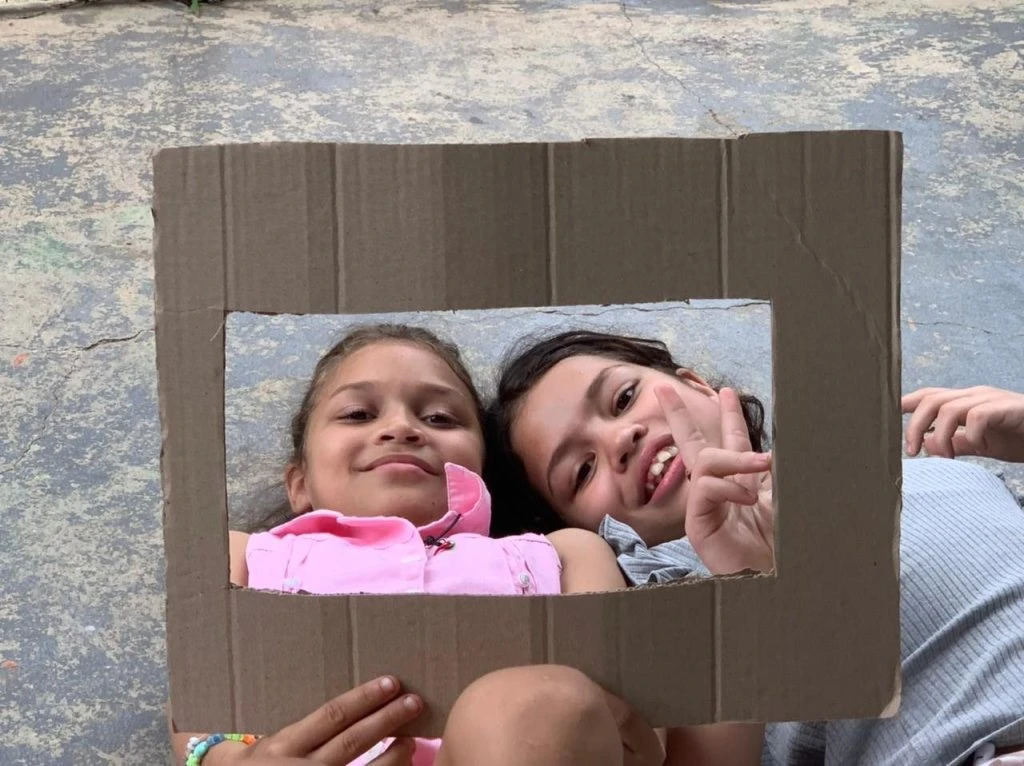
1. A shot without a camera. Inspired by Inventar com a Diferença: in pairs, one student keeps their eyes closed and is guided around the school by their partner for about three minutes. At the end, the guide positions their partner as if they were a camera, and the “camera” opens their eyes for about five seconds. Afterwards, the class talks about the “images” they saw, or draws them (MIGLIORIN et al., 2014, p. 38). With no equipment at all, everyone understands what framing is.
2. Pause and ask. Choose a short film and stop it at three moments. Each time, ask: where was the camera? What was left out of the frame? If you were the director, what would you change? This is Bergala’s creative analysis, classroom edition.
3. Tulips instead of roses. After watching a scene, ask each group to describe how it would look if it had been filmed differently: another place, another time of day, another song, another point of view. There is no right answer. The point is to realize that a film is made of choices.
One real minute of cinema
This video shows the Lumière Minute exercise done by teenagers at the Youth Center in Pinhais (Paraná), in Projeto Realidades, a workshop run in partnership with Pupilo. It follows Bergala’s three operations: an everyday action, a single shot, a still camera for one minute.
What about the syllabus?
Treating cinema as art doesn’t mean giving up on content. Fresquet and Migliorin argue for a cinema that produces many kinds of learning, including content, but “as an effect and not as a goal” (FRESQUET; MIGLIORIN, 2015, p. 16, our translation). A class that has really talked about a film made in a quilombola community will remember the history of that territory. But it will remember because it lived something in front of the screen.
On Pupilo Play, each film has a synopsis, credits and information about who made it. It is a good starting point for watching like someone who is about to film.
In this series
- #1 Why cinema at school
- #2 Law 13.006, more than ten years on
- #3 Cinema as art at school (this post)
- #4 When the class makes the film: what we learned from our workshops
- #5 How to bring a film into class with Pupilo Play
References
- BERGALA, Alain. A hipótese-cinema: pequeno tratado de transmissão do cinema dentro e fora da escola. Translated by Mônica Costa Netto and Silvia Pimenta. Rio de Janeiro: Booklink; CINEAD-LISE-FE/UFRJ, 2008. (Original: L’hypothèse cinéma, 2002.)
- FRESQUET, Adriana; MIGLIORIN, Cezar. Da obrigatoriedade do cinema na escola, notas para uma reflexão sobre a Lei 13.006/14. In: FRESQUET, Adriana (ed.). Cinema e educação: a Lei 13.006 – reflexões, perspectivas e propostas. Ouro Preto: Universo Produção, 2015.
- MIGLIORIN, Cezar; PIPANO, Isaac; GARCIA, Luiz; GUERREIRO, Alexandre; NANCHERY, Clarissa; BENEVIDES, Frederico. Inventar com a diferença: cinema e direitos humanos. Niterói: Editora da UFF, 2014.
- STECZ, Solange Straube. Cinema na escola: muitos desafios no horizonte. In: FRESQUET, Adriana (ed.). Cinema e educação: a Lei 13.006 – reflexões, perspectivas e propostas. Ouro Preto: Universo Produção, 2015.
- Minuto Lumière – Projeto Realidades. Pupilo YouTube channel, 2023.