Cinema and education #1 — Why cinema at school
This is the first post in Pupilo’s Cinema and Education series: five conversations with teachers who want to bring films to school with more purpose, and less guilt about “stopping the lesson”.
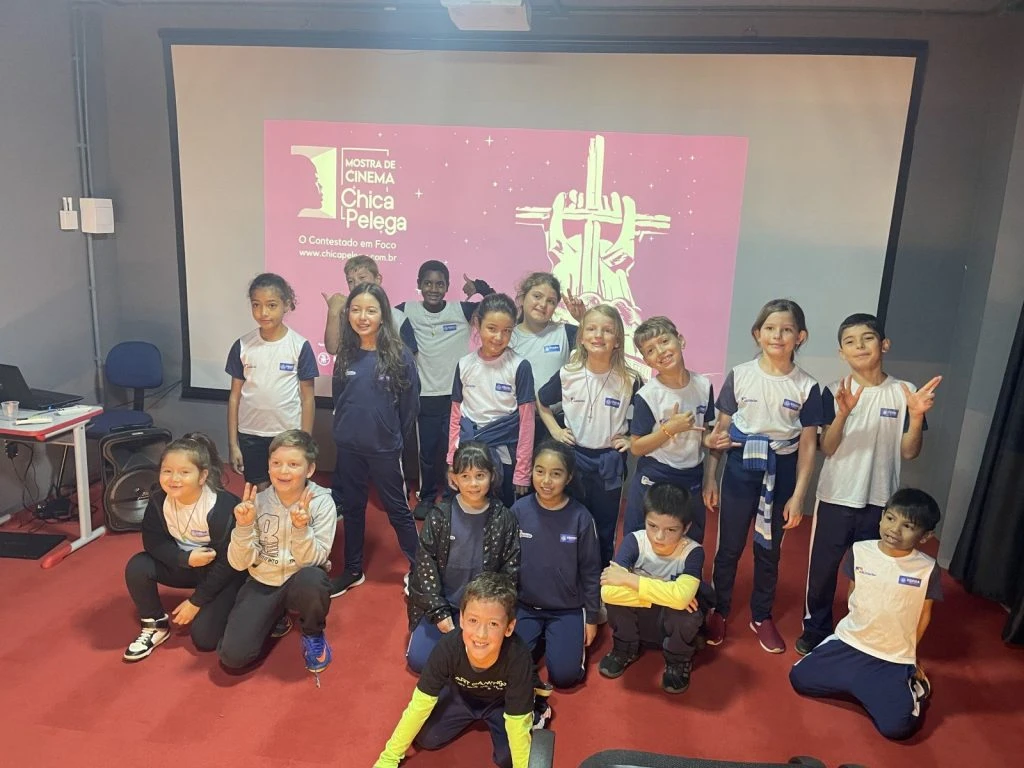
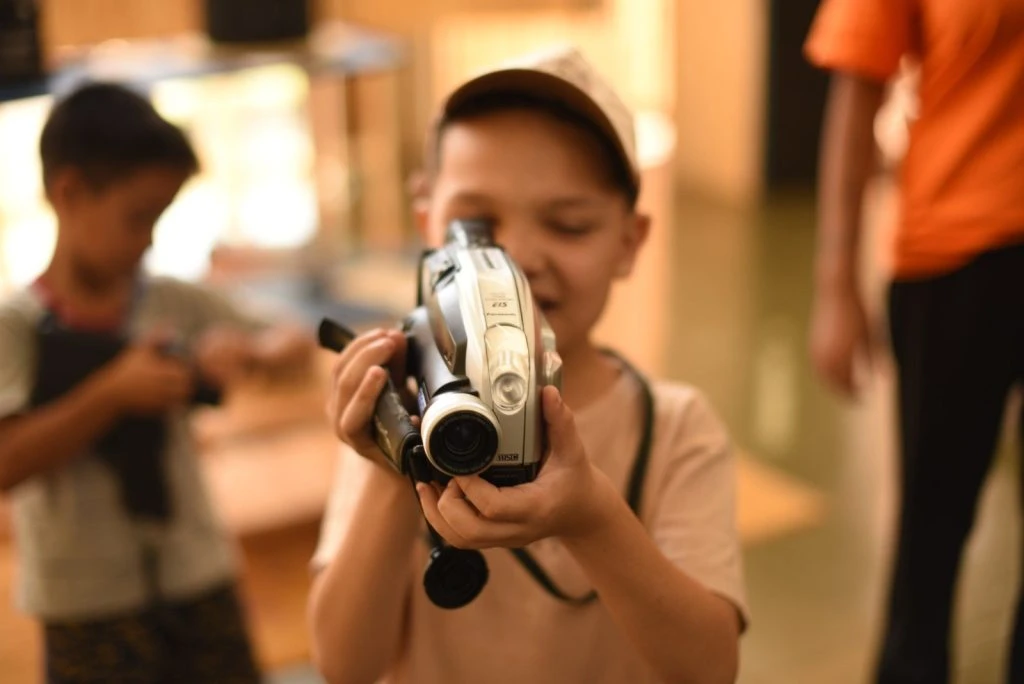
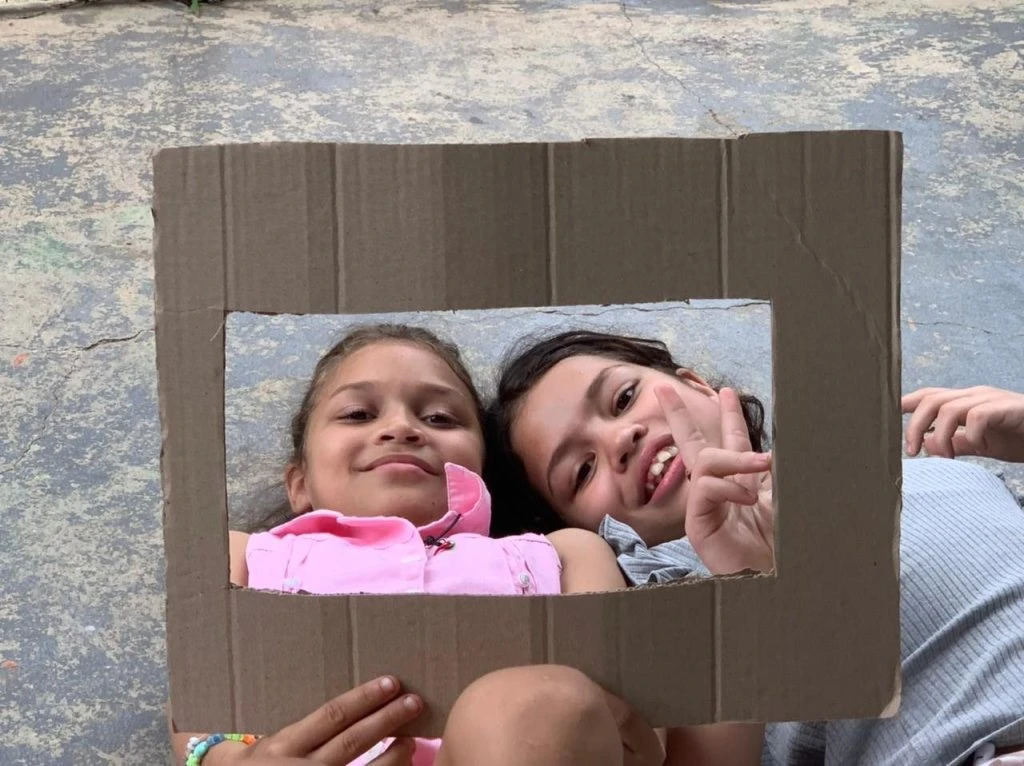
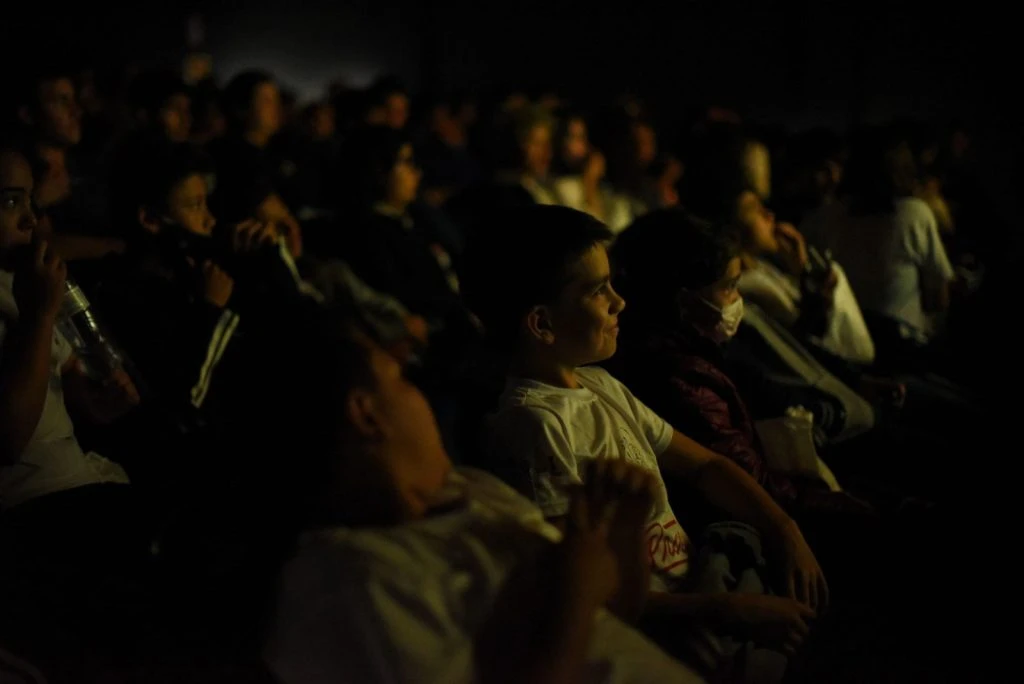
April 2022. In schools in Campos Novos, Curitibanos and Caçador, in the Midwest of Santa Catarina, Brazil, the 2nd Chica Pelega Film Festival held its School Screenings. Whole classes in front of a screen, watching Brazilian films, many of them made nearby, about the history of their own region. People who were there remember the faces more than the films: the silence slowly settling in, the laughter spreading from one kid to the next, the hand that goes up at the end to ask “but did that really happen?”.
This series starts from a simple question that every teacher has heard in the staff room, or asked themselves: why cinema at school? Isn’t it enough for children to watch films at home, on their phones, on TV?
It may be the only place
The French critic and filmmaker Alain Bergala, who between 2000 and 2002 helped design a major arts program for French public schools, has a straight answer. He admits that school, as it works, was not made to welcome art. But he points out that for most children it is the only place where that encounter can happen (BERGALA, 2008, p. 32).
Outside school, what reaches children are, in his words, cultural goods that are “quickly consumed, quickly perishable” (BERGALA, 2008, p. 32, our translation). His conclusion follows: if the encounter with cinema as art does not happen at school, for many children it risks not happening anywhere at all (BERGALA, 2008, p. 33).
Think of small inland towns where the nearest movie theater is one or two hours away by road. Think of the phone’s menu, chosen by an algorithm. School may be the only window onto a film nobody would recommend: a documentary about your own town, a short film without dialogue, a film made by other children.
A film is not just a means to something else
In practice, films usually enter school in one of two ways. One is planned: the film illustrates a subject, sparks a debate, opens a topic. The other is “casual use”, as researcher Monica Fantin, from the Federal University of Santa Catarina (UFSC), describes it: the film that fills in for an absent teacher or takes up a free period (FANTIN, 2015, p. 178-179).
The first way has value, and no one needs to give it up. Researchers Adriana Fresquet (UFRJ) and Cezar Migliorin (UFF) make clear that they do not want to deny this use, which they call a “legitimate and powerful” possibility; their criticism is aimed at it being the only path for cinema at school (FRESQUET; MIGLIORIN, 2015, p. 14, our translation). A film can teach history, science or language. But it can also be something else: an experience that serves no purpose other than being lived, thought about and talked over.
The title of an interview with Brazilian film critic Ismail Xavier, from the University of São Paulo, sums it up: a cinema that “educates” is a cinema that makes us think (XAVIER, 2008). Think about the film itself, about how it was made, and about everything it puts in front of us.
A “common thing” between teacher and student
In The Ignorant Schoolmaster, philosopher Jacques Rancière tells the story of Joseph Jacotot, a French teacher who, in the early 19th century, had to teach Dutch students without speaking Dutch. The solution was a bilingual edition of a novel, Télémaque. The book became the bond between them, the “common thing” (RANCIÈRE, 2002, p. 15). Teacher and students looked at the same object, and each had something to say about it.
Fresquet and Migliorin suggest that a film, and a Brazilian film, can be that third thing between those who teach and those who learn (FRESQUET; MIGLIORIN, 2015, p. 17). It is a freeing idea for teachers: in front of a film, nobody knows everything. The student who spotted a detail in the background can teach the class something. The teacher can be surprised. Fantin reminds us that children often notice things in films that adults miss (FANTIN, 2015, p. 180).
Not always beautiful, not always comfortable
Bringing cinema to school does not mean bringing only “beautiful things”. Fresquet and Migliorin insist on this: cinema is also the place of the ugly, the unbearable, the strange and the disturbing (FRESQUET; MIGLIORIN, 2015, p. 12-13). A good film can make people uneasy, leave questions unanswered, show a world the class doesn’t know, or knows all too well.
That is not a reason to avoid it, but a reason to prepare the screening carefully. The choice of film, the age of the class, the age rating and the conversation afterwards all matter. We will get to that in the next posts.
See what the School Screenings looked like
This short video shows the School Screenings of the 2nd Chica Pelega Film Festival in Campos Novos, Curitibanos and Caçador (Santa Catarina), in April 2022.
To get started as early as next week
Watch it first, on your own. A 10 to 15-minute short film is perfect. Write down what caught your attention and what might be hard for the class.
Take care of the room. Lights off or curtains closed, sound that reaches the back row, phones put away. A screening is different from “playing a video”.
Don’t explain everything beforehand. Say the title, who made the film and where it comes from. Let the class discover the rest.
Start the conversation with open questions. What did you see? Which moment do you remember? What felt strange? Before the “moral of the story”, listen.
Pupilo Play offers Brazilian short films selected for the classroom, many of them with a lesson plan linked to Brazil’s national curriculum (BNCC). Educator accounts are free.
In this series
- #1 Why cinema at school (this post)
- #2 Law 13.006, more than ten years on: what it requires and how to comply
- #3 Cinema as art at school
- #4 When the class makes the film: what we learned from our workshops
- #5 How to bring a film into class with Pupilo Play
References
- BERGALA, Alain. A hipótese-cinema: pequeno tratado de transmissão do cinema dentro e fora da escola. Translated by Mônica Costa Netto and Silvia Pimenta. Rio de Janeiro: Booklink; CINEAD-LISE-FE/UFRJ, 2008. (Original: L’hypothèse cinéma, 2002.)
- FANTIN, Monica. Cinema e infância na escola: algumas questões sobre a escolha dos filmes para crianças. In: FRESQUET, Adriana (ed.). Cinema e educação: a Lei 13.006 – reflexões, perspectivas e propostas. Ouro Preto: Universo Produção, 2015.
- FRESQUET, Adriana; MIGLIORIN, Cezar. Da obrigatoriedade do cinema na escola, notas para uma reflexão sobre a Lei 13.006/14. In: FRESQUET, Adriana (ed.). Cinema e educação: a Lei 13.006 – reflexões, perspectivas e propostas. Ouro Preto: Universo Produção, 2015.
- RANCIÈRE, Jacques. O mestre ignorante: cinco lições sobre a emancipação intelectual. Translated by Lilian do Valle. Belo Horizonte: Autêntica, 2002. (Original: Le Maître ignorant, 1987.)
- XAVIER, Ismail. Um cinema que “educa” é um cinema que (nos) faz pensar. Interview. Educação & Realidade, Porto Alegre, v. 33, n. 1, p. 13-20, Jan./Jun. 2008.
- Cobertura 2ª Mostra de Cinema Chica Pelega – Sessões Escola. Pupilo YouTube channel, 2022.